
Had a lovely visit over at All Nine Muses today with Kelly Belmonte on her Fridays with Friends. http://allninemuses.wordpress.com/2013/05/03/fridays-with-friends-nancy-tupper-ling-pays-attention/
Category: Uncategorized
Raise a Glass, and then What?

It’s that time of year again. You’ve found yourself smack dab in the middle of the holidays. In the midst of all the hustle and bustle, there is a chance that you might be called upon to give a toast, especially if you are hosting a party. Perhaps this year you’ll blow the socks off of Great Uncle Lou when you raise your glass and offer a toast with great poise and finesse. In the words of de Cervantes, “Preparation is half the victory.”
Of course all the preparation in the world can’t prevent those unanticipated events best known as bloopers. Think of the hours, months, days that go into planning the perfect wedding. If you’ve watched those famous wedding bloopers, all it takes for one ceremony to go amuck is a well-meaning best man stepping on the bride’s train. Next thing you know both the bride and the minister are splashing into the pool’s blue waters behind them.
Still, as any professional toastmaster will tell you, it pays to keep a toast or joke in your back pocket for those important life events. When done well, a toast is memorable—a custom worthy of preservation. In days of old, even the humble blacksmith was equipped to ring in the New Year with a few words:
May your nets be always full—
your pockets never empty.
May your horse not cast a shoe
nor the devil look at you
in the coming year.
As Paul Dickson says in his book Toasts: Over 1,500 of the Best Toasts, Sentiments, Blessings, and Graces, “There are a number of old things which we are well rid of—child labor, the Berlin Wall, scurvy, glass shampoo bottles, and too many others to mention—but there are still others that we are foolish to let slip away. Toasting is one of them.”
The custom of raising a glass to health, prosperity, and the holidays dates back to antiquity. It may be difficult to picture the cavemen toasting to a good hunt, but certainly the Hebrews, Persians and Egyptians were toasters. Even Attila and his Huns “led no less than three rounds of toasts for each course during a dinner of many courses,” according to Dickson. We can only imagine what a New Year’s toast by Attila would sound like: “Here’s to fast horses and conquering the small people of the world.” Certainly, no one would want to leave Attila off of their guest list; there might be dire consequences.
In Great Britain, some of the first toasts to the New Year began as old wassailing songs, the following being one of those recorded:
Here’s to ________ and his right ear,
God send our maister a Happy New Year;
A Happy New Year as e’er he did see—
With my wassailing bowl I drink to thee.
While that toast may be outdated for our tastes, even the modern toaster can feel daunted trying to find the perfect toast for an event. One can be left tongue-tied and uninspired at the last minute. It’s true, the modern guest can whip out a smart phone from his back pocket, Google “Toasts” with one hand and raise a glass to cheer the New Year, all in one stride. This is all well and good, but there is something in the presentation that might be missing. After all, toasting is an art, a form of human expression.
Along with Dickson’s book, there are other helpful sources that can be found in our Minuteman system. Toasts for Every Occasion: Warm, Wise, and Witty Words Collected from Around the World by Jennifer Rahel Conover contains 1,300 toasts with an extensive list of 170 categories, including the blacksmith toast above. Some of the categories will give you a laugh between Baldness, Drunkenness and the light topic of Hell. For the New Year, you can’t go wrong with this one:
Here’s to the blessings of the year,
Here’s to the friends we hold so dear,
To peace on earth, both far and near.
The editors of Town & Country publish one of my favorite books. Town & Country Toasts for Every Occasion is well-organized, easy read. Along with several holiday toasts, you can find a toast or two on the subject of Fishing. What more could one need then a little hook, a line and some bubbly? Maybe Attila could have learned from this well-mannered book. As the saying goes, “teach a man to fish, you feed him for a lifetime.”
The book with the most toasts and sayings is entitled, Toasts & Quotes: Little Giant Encyclopedia by Sterling Innovation. Perhaps the most helpful section of this resource is the ten pages at the beginning with tips on presenting a speech. I find “short and sweet” to be the best words of advice I’ve ever received when it comes to a good toast. Dag Hammarskjöld proves this point with the following:
For all that has been—Thanks!
For all that shall be—Yes!
When all is said and done, and we’ve survived the Mayan calendar and entered 2013 with gusto, it’s likely most of us can relate best to the pragmatic toast of the beloved O—Oprah Winfrey:
Cheers to a New Year and another chance for us to get it right.
Even the blacksmith of old might raise his glass to such a sentiment as that.
First Steps
It began on a trip to Alaska. I read about a library in a small town that provided books to the newborns in their local hospital.
“Hey,” I thought. “We have a hospital in Norwood. Why not do the same thing?”
I wanted to jump right in. As soon as I returned from my vacation, I planned to let my idea take flight. Except . . . even the best of plans take some time to come to fruition—a year and a half, to be exact. Still, the timing couldn’t have been better. Just look at our first sweet recipient. First Steps Norwood has been launched, and I couldn’t be more excited.

The Art of Journaling

When I was ten years old, my family took a trip to Nova Scotia. I decided to bring along my new diary. It had blue and orange stripes and the all-important lock on the outside. The pages were gold-tipped, and soon the sparkles were flaking onto me and the backseat of the car. When we stopped at a local restaurant to eat, my Mom spent the first part of the meal wiping the endless sparkles from my nose.
The thing that I treasured the most about my new diary was all the empty pages waiting to be filled. Do you know that feeling? With the right pen, the sky was the limit. Pages were awaiting my brilliant thoughts and recorded memories. For three days, that dream was a reality. I wrote about the beauty of the Cabot Trail, the Bay of Fundy, a nice retired couple I’d befriended, and the cozy inn where we stayed.
By Day Four, I decided to take a break. I’d start up again the next day. That was a promise but, by Day Five, that promise was broken. I was only ten years old, after all, and covered in sparkles. Not to mention, I’d discovered something about diaries. There was a lot of pressure attached to this daily recording. So, the rest of my diary remains empty to this day. Crisp, clean, boring.
Not until I became a writer did I realize the trick to the art of journaling: a journal is different than a diary. A diary is something that includes the date on each page. Some folks love this method. My Uncle Warren is a Civil Engineer. In meticulous fashion, he logs in every day, things like the weather, the barometric pressure, the day’s highlights. He would be the perfect witness at a trial. The problem is that many of us lose our drive to write when we are trapped by the “rules” of daily recordings.
Journaling is a whole different experience. Journals can have various subjects or themes: a travel journal, a baby journal, a memory, an idea journal. The latter is what I do best. My journal entries aren’t chronological or neat or profound or earth-shattering. Well, at least not all the time. Sometimes I glue in a picture or a postcard. Sometimes I scribble an idea onto a receipt from the gas station (I have a lot of those) or a torn paper bag. Then I’ll tape or glue that idea into my journal. To me, a journal captures moments and memories and ideas, all without guilt. Guilt-free.
It was my own love of journaling that compelled me to share this art with others. I’ve led many journaling workshops over the years, but I have one that I truly treasure. With a nudge from Pam Chubet at Norwood Housing Authority , I began to lead a journaling workshop at the Walsh Housing over a year ago. We meet on the second Tuesday of the month and we explore memories. I bring a simple canning jar with a pop lid, and from the jar I pick out a few prompts for the day. It’s amazing where these questions take us. We write for several minutes and then we feel free to share. I’m blown away by the detailed memories that my participants recall: the ice man coming up the street for deliveries, the day President Kennedy was shot, the boy who greeted his neighbor every day while she was healing from an illness on her front porch. My prompts are simple, but the responses are always unique.
As with any art, we can find ways to improve our technique with time. Over the years, I have found several sources to guide my journaling. My own desire to journal was fostered when I took a class with Alexandra Johnson. A teacher of memoir writing and creative nonfiction at Wellesley College and the Harvard Extension School, Johnson won the James E. Conway Award for her distinguished teaching . Her book, Leaving a Trace: On Keeping a Journal, serves as a guide to enriching “your experience of recording your thoughts and impressions of the world around you.” By examining the journals of famous writers, such as May Sarton and John Cheever, Johnson is able to coax others to try the same techniques.
For those journal keepers who prefer to mix art with words, there are two other useful sources.Visual Journaling: Going Deeper than Words by Barbara Ganim and Susan Fox demonstrates how this combination can be extremely powerful. Sometimes we can’t find the words to express ourselves, especially when we are younger. Visual journaling uses art to reduce stress, release anger and give voice to your soul, all within the confines of a journal. You don’t have to be an artist to record your memories in picture form.
For those who are artistic, there is another book entitled Artist’s Journal Workshop: Creating Your Life in Words and Pictures. Cathy Johnson draws on her own insight, having used this process for structure and inspiration in her own life. However, she also shares pages and advice from 27 international artists and their journals.
Of course, it is up to the journal keeper to decide who will read her words. Journaling may serve as a cathartic process and that may be enough. On the other hand, the journal keeper may discover a book waiting to be written after unearthing unique and captivating memories. Author Phyllis Theroux did just that with her memoir, The Journal Keeper. Well-known for her essays, Theroux takes her reader on a journey through six years of her life as a writer (from 2000 until 2006), revealing topics that occupy all of us—love, finance, death, loneliness.
And really, at its best, this is exactly what journaling should accomplish: your thoughts, your words, your memories, captured for time. Only you can record your story as you see it. As Holocaust survivor and author, Elie Wiesel said: “That is my major preoccupation –memory, the kingdom of memory. I want to protect and enrich that kingdom, glorify that kingdom and serve it.” After all, the human story is your story, too. Don’t be afraid to write it down.
Going for Gold
Like many of you, I’ve been sitting on my couch each night, mesmerized by display after display of Olympic achievement. Whether watching Michael Phelps sweep the all-time Olympic gold record or Gabby Douglas wow the judges on bars, I have this distinct thought: there’s no way, given an eternity to train, that I could accomplish such feats. These Olympians are super-human —they venture beyond the beyond.
But then another thought edges its way into my brain: “Wait one minute! Isn’t this exactly what I’ve been doing, day in and out, for the past 13 years?” I have been training like an Olympian. The difference? Like many of you, my training has been on a track of words.
And this is the thing….my goals and the prize keep changing. In 1999 when I submitted my first poem into the world, I swore I’d be satisfied with one tiny poem in print. Having one person out in the world appreciate my words would be enough. In my mind, that was gold. And then . . . it happened—the “wanting.” I’m not sure what that wanting was exactly: a winning feeling? a deep desire for my words to reach the wider world? But I liked it. I wanted to ride this wave some more.
The good thing is I don’t believe I’ve mastered this art. As Ellen Bryant Voigt advised one of her students: “Honey, it’s all draft until you die.” I realize I’m not through learning. I continue to take workshops. I’ve formed critique groups. I revise and revise. But my goals took on a new form.
 Maybe I’d publish a whole book of poems. Check. Maybe another prize? Check. Maybe the biggest prize? Check. But there’s more How about a whole new genre?! Why not write for children? Of course, I’d be satisfied with ONE picture book, right? That’s the new gold standard. Then I’d let my surf board glide into shore. But wait! There’s the Olympics.
That’s why, in some small way, I can relate to the athletics on my television screen. I, too, have set goals, I’ve mastered techniques. I’ve trained with the best. In her article “Train like an Olympian [http://sportsmedicine.about.com/od/sampleworkouts/ss/OlympicTraining_10.htm],” Elizabeth Quinn discusses strategies for Olympian success. And as writers, we can apply these to our work. One of the hardest strategies for me is the one Quinn calls “Rest and Recover the Right Way.” This is the stepping back period. I would add Reflection to this category, or a time to be grateful—to reflection all the successes, small, large, and nothing short of miraculous, along the way.
Recently I reminded a friend of mine of this. He has authored and illustrated over 40 books in his career. When he received an unfavorable review of his latest book, he was in a funk. To be so close to touching that wall, touching that medal, and then to have it yanked away was devastating. But that’s when we have to ask ourselves: are all those ribbons and trophies and medals on the wall the real goal? Can they ever stack up to lives touched, hearts changed and, in the case of authors, those first readers who dared to put fingers to our pages and read our words out loud? I don’t think so. To me, this is the Olympic-sized goal worthy of pursuit, even if NBC never captures it on tv.
Eternally Optimistic
Like many of you, I have children who are polar opposites. One daughter sees the world through a half-empty glass; the other sees her cup as overflowing. This doesn’t mean that rain can’t fall on her, but when it does, she’ll grab an umbrella and jump wildly through the puddles. I admire this about her. She wakes up and seizes the world with both hands. My desire is to emulate her. This applies to many aspects of my life, but often to writing. You see, what I’ve observed about this eternal optimism of hers is that she seeks and searches for joyful things–objects of hope and delight, security and beauty. See, this is the ceiling of her bedroom–cranes stretch across it, butterflies dance around her windows.

And, on the rare day when she’s a little down, she’ll find something soft and warm and lovely, and envelop herself in it. It’s important to do this as writers too.

Recently, a few of my writing friends have had to make a hard decision. They’ve decided to follow a different road. After several years of hard, hard work, along with waiting and hoping for a story to be published, they’ve decided to put away their pens for now. This makes me sad. They are beautiful writers, but the publishing market, like the economy, is tough. Many times I’ve thought of doing the same. That’s when I remember my “Hope Builders.” You see, my dirty little secret is that I keep funny little treasures to lift my spirits. They relate to my stories in some way.
This is Sebastian Lee. My crit group jokes about this character. I was asked by a big publishing house to change him from a Chinese-American boy to a duck. Why not, I thought? It’s worth it. But Sebastian Lee was rejected in his duck-like form as well. His sidekick, Fiona, changed for a Latin-American girl to a hedgehog. In my story, they’re back to being human again, but these guys put a smile on my face and keep me hope for their future in print.

And this is my Double Happiness Box. I found it in an antique shop in Essex. I keep it as a sign that my Double Happiness Box story will be published some day as well. It’s getting a little dusty, but the phoenix and dragon are faithful reminders.

 And lastly, I discovered this card in a gift shop in Fort Myers. I envision two of my characters, Champ and Scooter, to look just like this. And yes, these objects may be a silly pipe dream but, like my daughter, I’ve chosen to believe in their future. Perhaps these “Hope Builders” will come to life someday through their very words. Just wait and see
Split Personality
Some days I am a librarian at the Morrill Memorial Library in Norwood, Massachusetts. Some days I am an author who visits schools and attempts to pen a few words around midnight when the house is quiet. As a mother, wife, author, librarian, wannabe knitter, pathetic scrapbooker, amateur photographer (the attached photos don’t count…they were from my cell phone, for crying out loud), I am always tired. BUT, on rare days like today, my two hats blend.
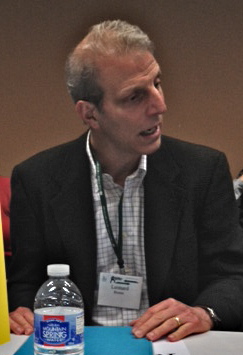
Today I was at MLA’s (Massachusetts Library Association’s) Conference, and I was able to meet six fabulous authors from our fine state. We “Speed-Dated,” i.e. we had four minutes to talk with each author in rotating fashion.
I want you to meet them as well, because their books are Must-Reads selected by the Massachusetts Center for the Book (www.massbook.org).
 |
| Leonard Rosen |
 |
| D.M. Gordon |
D.M. Gordon is a poet I met several years ago at the Frost Place. Her book Nightly, at the Institute of the Possible is her second collection of poetry. I can’t wait to dive into my autographed copy tonight.
I must add my fellow Fine Line Poet (www.finelinepoets.com), J. Lorraine Brown, also has a poetry collection entitled Skating on Bones that was on the Must-Read list as well. Her book was published by Finishing Line Press.
 |
| Jef Czekaj |
Jef Czekaj is a force to be reckoned with. He is a cartoonist, children’s author/illustrator, and musician. Check out his Must-Read entitled New Alphabet. It is so fun! He also wrote Hip and Hop, Don’t Stop!, Cat Secrets, and the Circulatory Story.
 |
| L.M. Vincent |
L.M. Vincent (Larry) waited a long time for his Motif No. 1: The History of a Fish Shack to be published, but it was well-worth the wait. You may recognize the historic red shack that sits on the pier in Rockport, but Vincent reveals its historic road to becoming an American icon.
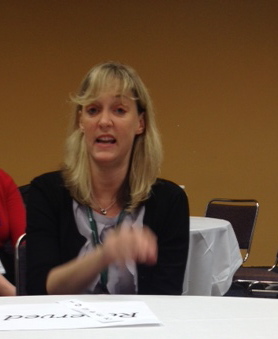
And then there’s the lovely Kimberly Marcus whose novel, Exposed, explores the subject of sexual assault through the lens of a 16 year old girl, Liz. She must grapple with her best friend’s accusation against her own brother. Her novel is in free verse, one of my favorite styles to read.
 |
| Kimberly Marcus |
 |
| Laura Harrington |
If that’s not enough for fabulous choices, our last author was Laura Harrington whose award-winning plays, musicals, and operas have been widely produced in the U.S., Canada and abroad. Her first novel is Alica Bliss, and it crosses over from adult to young adult. It is a coming-of-age story about a young girl whose father is deployed to Iraq.
Yes, it seems a day when I can blend all my hats is the best day of all!
The May Days
What I needed was a little accountability–a wee bit of momentum to light my fire. All I asked for from my Facebook friends was for encouragement to write a page or two every day in May, with the intent of jump starting a middle grade novel. What I received was amazing–a new group. Our members are both established and newbie writers. In a matter of seconds, friends were piling on the band wagon. Soon someone suggested forming a group and, for momentary lack of creativity, we formed The May Days. Now thirty + members strong, we are working toward the same goal–word production and daily creativity. And, if it doesn’t work out now and then, we keep one another going. More than anything, I am amazed by the heart these writers. When a dear friend in our group learned of her mother’s passing last night, everyone immediately sent their sympathies. One thing we all know, solace and healing can be found in the word. Here’s to many new and fabulous creations coming from The May Days.
Hidden Treasures
Yes, I know. Most people head to Cape Cod or Florida for Spring Break. What did we do? A road trip. All we needed was a Winnebago, but we didn’t have that. We had a minivan packed full with two parents, two grandparents, two kids and a loaf of bread and peanut butter. Still, what we discovered was mind-blowing. Everyone needs to drop what they’re doing and visit these amazing sites. They will make you proud to be an American, and you will go home with fluorescent rocks in your pocket.
The first is the Mariner’s Museum in Newport News, Virginia. Has anyone else been here? When we entered, we had only one enthusiastic member of our party, my dad, the retired Naval Commander. When we left, we gave it a “Top Ten” ranking for museums in the U.S. History comes to life there. I had learned about the famous Civil War Battle of the Ironclads in my history classes, but I didn’t understand the magnitude of this event until the hands-on exhibits at the Mariner’s Museum. I felt part of the battle at sea while watching a movie on this famous clash between the North and South. The Monitor’s revolving gun turret is housed here, raised during a 2002 expedition off of Cape Hatteras. See, amazing: http://www.marinersmuseum.org/uss-monitor-center/conservation-uss-monitors-turret-webcam. While exploring the museums many corridors, my daughters learned how to tie sailor’s knots, and lift cannon balls like those used by Admiral Nelson.
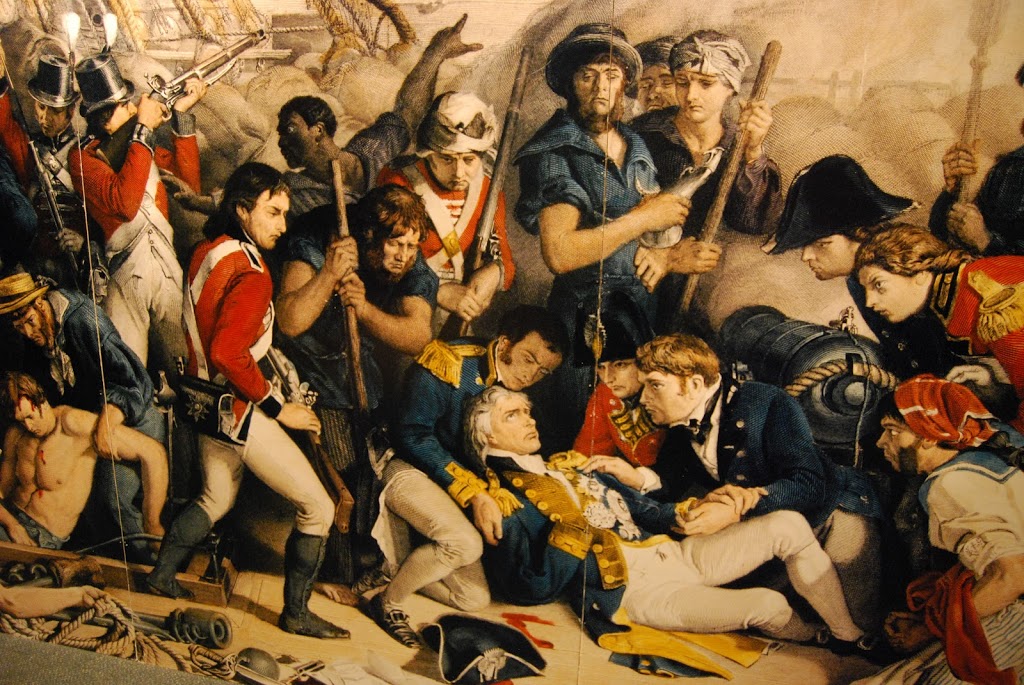

I had a whole new appreciation of the amazing characters who have graced my history books of old.
And if you haven’t heard of The Miniature Ships of Winnifred and August F. Crabtree, check this out. This minature took him years to make.
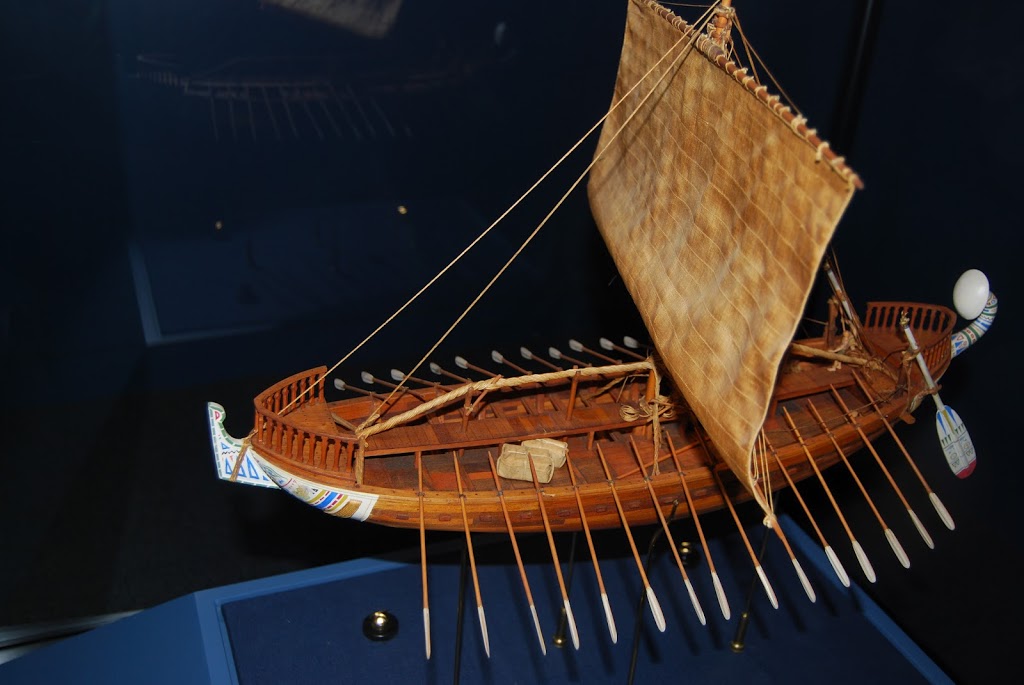
All I can say is, good thing his wife was “onboard” with his project. All this for the low cost of $12 for Adults ($11 for Seniors/Military/AAA, $7 for Children Ages 6-12, and Children 5 and Under are free.
And, while I’m on the topic of hidden treasures, the Sterling Hill Mining Museum in Ogdensburg, New Jersey is another. http://sterlinghillminingmuseum.org. As they say, “There’s No Other Place on Earth,” and I am witness to that. I am learning all about mines for a “some day” novel I’m working on. Boy, was this the place to go. Bill K was our expert tour guide. A geologist, civil engineer and all-around educator, Bill taught us all about the life of the miners and, in this case, the “glow-in-the-dark” fluorescent minerals they were mining. Would you want to work down here? It was like taking a roller coaster ride to work.

While it was back-breaking and hazardous at times, it was nothing compared to the dirty, dusty job of a coal miner. At least zinc mining is relatively clean. Plus, we learned fascinating tidbits.

 Look, this is how the miners kept their clothes.
See all these beauties.
And just to add frosting to the cake, everyone selects a rock to take home. Priceless!
Library Secrets: Part 1
I have decided to blog about some library secrets (i.e. helpful tips for your research as a writer, sleuth, wannabe trivia master, and more). To start, I am including my essay about the future of the public library. This is probably not a big secret, or is it? You be the judge.
Geckos and the Future of Libraries
A library is not a luxury but one of the necessities of life.
— Henry Ward BEECHER
— Henry Ward BEECHER
You may have forgotten his name—Martin. You may have a hard time deciding which one of his ads is your favorite: the one where he’s dancing in Texas, or his journey out of the parking lot. But there’s hardly a soul out there who wouldn’t recognize that tiny, British-accented gecko who is the mascot for Geico Auto Insurance. Not only is Martin a gecko, he IS Geico. Without a doubt, Geico has increased their sales and notoriety with consumers through Martin.
The future of our libraries depends on the same—a clear, concise marketing style. In the past, libraries have made the mistake of thinking they are separate from this business of marketing. We’ve argued, people should value us for what we are. Or, we’ve always existed, therefore we should be forever appreciated. Unfortunately, this is a harmful assumption. As much as any business out there, the library needs to make its value to the community known—consistently and constantly. Marketing is the key to our future.
So how do we do this? More than the number of books we provide on OverDrive, more than the variety of programs we offer children and seniors alike, it is the people behind the library’s name who serve as our best asset. As Rivkah Sass wrote in Library Journal (6/2002), “As highly touted, purely electronic tools like Questia fade into history, we should remember to market the value of what is the largest percentage of most library budgets—the staff.” Librarians bring indepth knowledge, experience, and a relationship to our patrons. We do this daily in the Outreach Department at the Morrill Memorial Library. We reach out to the community. We are in the business of touching people’s lives and making a lasting impression. This is what we do best, and this is something worthy of the patron’s attention.
In my parents’ Massachusetts town, there is a hardware store called Cataldo’s. This family- run store is a beloved fixture on Main Street. However, the day that Loews moved in everyone was worried. How could this small business survive the big competition? Turns out, it wasn’t a problem. Why? The reason for its success relates to librarians as well. Not only does Cataldo’s provide the goods. Not only do they provide the know-how. They provide the personal touch. They are there for you when ice dams crash through you ceiling. They know your children and your children’s children as they grow up.
Just as the famous jingle from Cheers goes, we all want to go where “everybody knows your name.” The library is that kind of place. We are essential to our communities—the great equalizers of society. We need to send out this message loud and clear. Librarians are valuable. You can bet your future on it.